Gravitational force (Earth surface)
Online calculator — enter the values and get the result instantly, with the formula and a worked example.
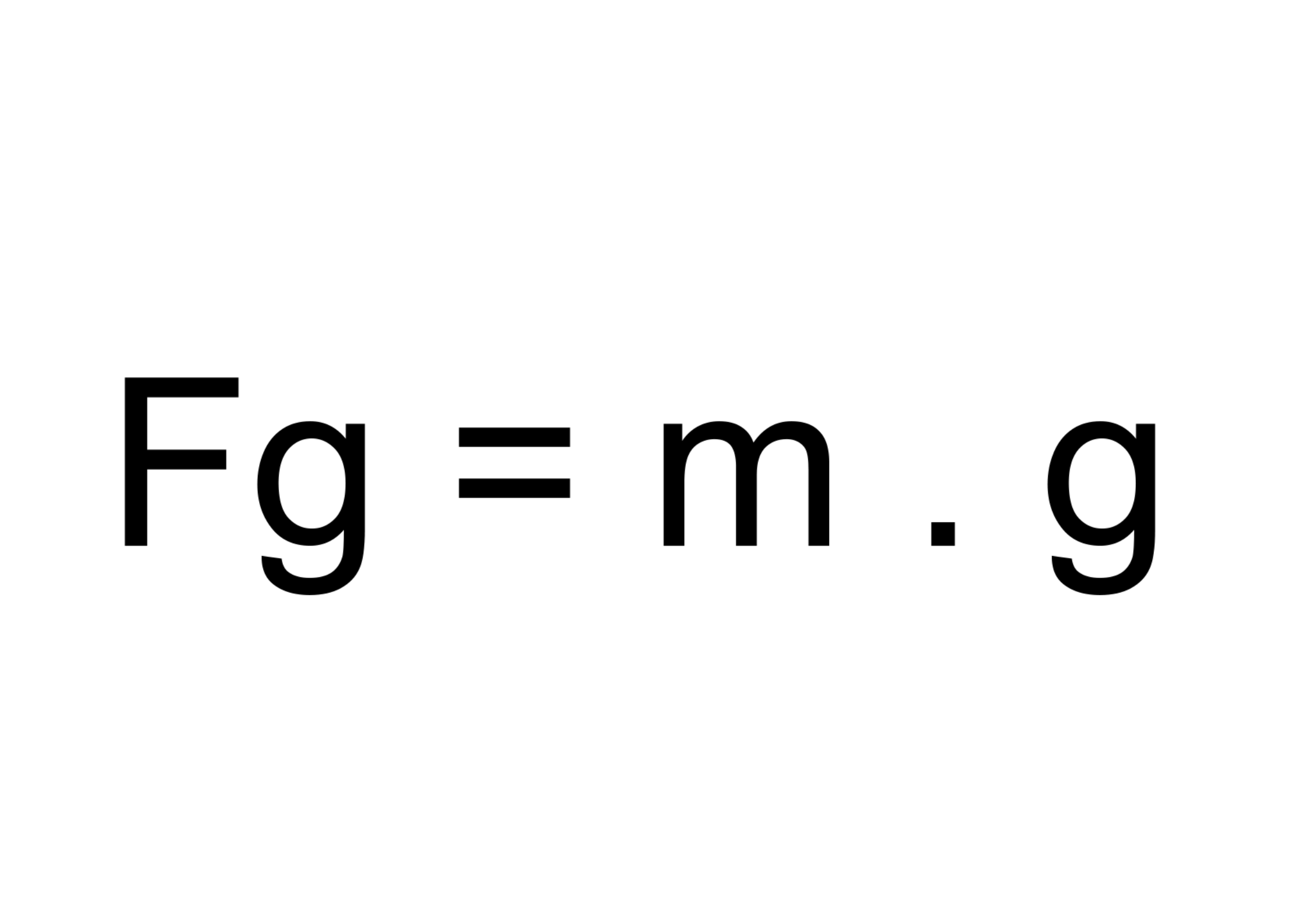
Fg = Gravitational force
m = mass
g = gravitational acceleration (approx 9,81N/kg)
Gravitational force is one of the four fundamental forces of nature, and it is the attraction that acts between any two objects that have mass. Every object pulls on every other object, but the effect is noticeable only when at least one of the masses is very large, such as a planet or a star. Its strength grows with the amount of mass involved and weakens rapidly as the distance between the objects increases, so nearby and heavier bodies pull much more strongly than distant or lighter ones. Although gravity is by far the weakest of the fundamental forces, it always attracts and never cancels out, which lets it dominate on the scale of planets, stars and entire galaxies. It is the force that gives objects their weight, keeps our feet on the ground and holds the atmosphere and oceans in place. On a larger scale it keeps the Moon in orbit around the Earth and the planets circling the Sun, and it shapes the structure of the whole cosmos. In everyday life we feel its effects constantly, from a dropped apple falling to the ground to the tides that rise and fall along the coast.
Gravitational acceleration g = 9,81 N/kg
Gravitational force Fg
–
| Mass m | – |
| Gravitational acceleration g | – |
| Gravitational force Fg | – |
A body with mass m is pulled downward by the force Fg
Solve it step by step — the next step unlocks only after a correct answer. You can type decimals with a dot or a comma.
